Consulting
Presencing Leadership for Deep Systems Regeneration
Leaders Today Operate in Environments Defined by Volatility, Complexity, Rupture and Regeneration
Many organizations respond with more analysis, tighter control, and faster execution. Yet these responses rarely address the deeper patterns that shape performance, culture, and long-term impact.
Otto Scharmer works with senior leaders, boards, and institutional stewards to strengthen the capacities required for deep systems regeneration — how leaders see, sense, and act together in complex environments.
This work is grounded in Theory U, a globally applied framework for leading transformative change across organizations and ecosystems.
The U- Process in Action
Co-Initiating — clarifying shared intention and strategic purpose
Co-Sensing — seeing the system and operating environment as a whole
Co-Inspiring — opening to emerging risks and future opportunities
Co-Creating — prototyping new approaches and learning in action
Co-Evolving — scaling and embedding what works
Three Shifts that Enable Deep Change
Mindsets — how leaders understand the system and their role within it
Relationships — how leaders build trust and collaborate across boundaries
Action — how leaders experiment, learn quickly, and translate insight into results
This approach draws on 25+ years of action research with organizations in business, government, and civil society and is part of the Presencing Institute’s U-Impact practice.
“The success of an intervention depends on the interior condition of the intervener.”
Bill O’Brien, former CEO, Hanover Insurance
Ways of Working
The aim is practical: better decisions, stronger alignment, and more resilient performance in complex conditions.
Senior Leadership Immersions (1.5–3 days)
Focused engagements for executive teams and boards at critical inflection points.
Leaders gain:
• A shared systemic view of their challenges and environment
• Greater coherence and trust at the leadership level
• Insight into patterns affecting performance and culture
• The ability to act with clarity under pressure
Advisory & Accompaniment (Typically 3–12 months)
Ongoing partnership supporting leadership, governance, and strategic transformation.
Organizations gain:
• A trusted thought partner during significant transition
• Stronger alignment between leadership, governance, and strategy
• Practical experimentation that informs long-term direction
• Leadership practices that support resilience and regeneration
u-impact
We work with leadership teams at key moments of change to improve decision-making, alignment, and execution in complex environments.
Drawing on the broader u-impact team and Presencing Institute network, we combine systemic insight with practical experimentation to help organizations move from insight to action and build the capacity to navigate ongoing transformation.
How the Work Happens
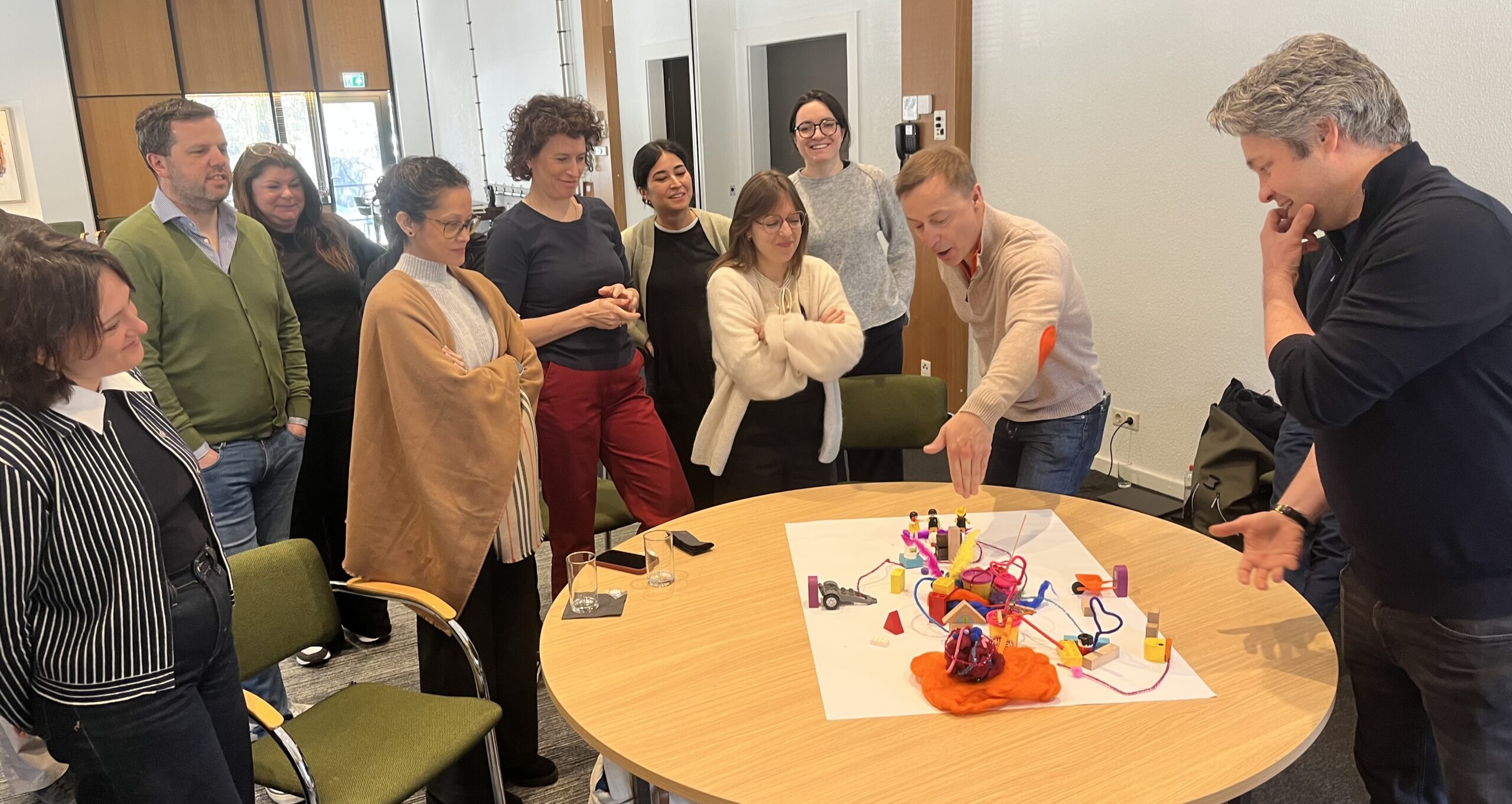
Engagements are tailored and may include systemic sensing practices, dialogue-based leadership processes, stakeholder engagement, case clinics on real strategic issues, and rapid-cycle prototyping.
The focus remains constant:
From fragmented perspectives → shared systemic awareness
From reactive decision-making → intentional, future-oriented action
From siloed efforts → coordinated, system-level impact
Who This Is For
Executive teams • Boards • Foundations • Public-sector leaders
Multilateral institutions • Cross-sector partnerships
Leadership that integrates performance, purpose, and responsibility for the health of the whole system.
Next Step
We begin with a conversation to explore whether this work aligns with your organization’s current challenges and aspirations.
CONTACT